

APDA TICAD9 Follow-up Parliamentarians’ Meeting Held in Egypt
28-29 April 2026, Cairo, Egypt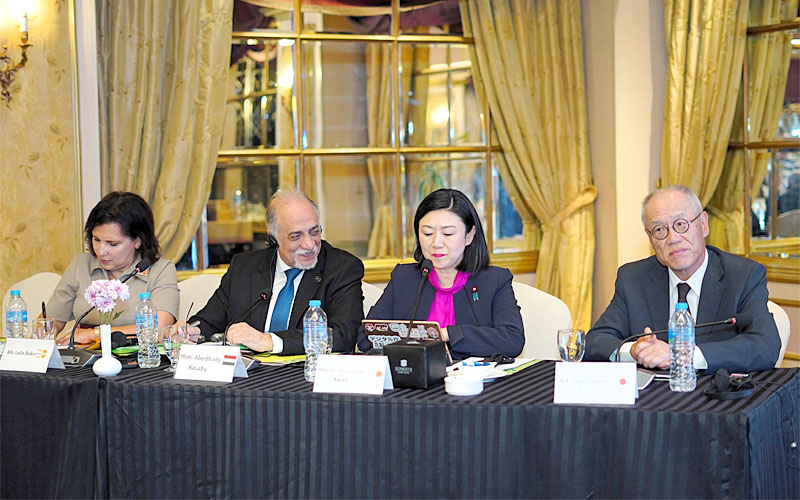
On 28–29 April, the Asian Population and Development Association (APDA) and the Forum of Arab Parliamentarians on Population and Development (FAPPD) convened the TICAD9 Follow-up Parliamentarians’ Meeting: Strengthening Policy, Financing and Legislative Engagement for Population and Development in Cairo, Egypt. The meeting was organized to review progress and follow up on the recommendations and priorities identified during the policy dialogue and TICAD9 thematic event jointly organized by APDA and FAPPD alongside the Ninth Tokyo International Conference on African Development (TICAD9) held in Yokohama in August 2025. With support from the United Nations Population Fund (UNFPA), the Japan Trust Fund (JTF), and the International Planned Parenthood Federation (IPPF), the meeting brought together more than 80 participants, including parliamentarians, government officials, representatives of international organizations and civil society, and experts from North Africa, Sub-Saharan Africa, and Japan to discuss population and development challenges and the role of parliaments in addressing them.
In her opening remarks on behalf of the organizers, Hon. Dr. Makishima Karen, Vice Chair of the Japan Parliamentarians Federation for Population (JPFP) and a member of the APDA Board of Directors, emphasized the importance of advancing Universal Health Coverage (UHC) and investing in women and young people to ensure that everyone can enjoy the right to live a healthy life. She also highlighted the critical role of AI and digital technologies in supporting sustainable development and called for stronger partnerships between Japan and African countries, stressing the importance of continued dialogue and mutual learning in addressing shared challenges. Thematic sessions explored responses to increasingly diverse and complex population and development challenges, including sexual and reproductive health and rights (SRHR), population ageing, youth empowerment, gender equality, food security, humanitarian crises, migration, and climate change. A parliamentarian from Morocco noted that while important progress has been made in strengthening legal frameworks to combat gender-based violence (GBV) and promote women’s empowerment, a key challenge remains ensuring that these laws are effectively implemented and translated into meaningful change on the ground. A parliamentarian from Tunisia highlighted the need to respond to rapid population ageing, while a representative from Algeria emphasized the importance of regional cooperation in addressing continent-wide challenges such as climate change and population mobility.
In the health session, the Japan International Cooperation Agency (JICA) presented its support for advancing Universal Health Coverage (UHC) in Egypt. In 2017, Egypt had the world’s third-highest level of out-of-pocket health expenditure as a share of household spending. Following the enactment of the Universal Health Insurance Law, the country has been gradually rolling out the scheme across all 27 governorates, with nationwide coverage targeted by 2030. To date, approximately six million people in six governorates have been enrolled, and Port Said Governorate has reported a 40% reduction in the proportion of households facing catastrophic health expenditure. Participants also learned about Japan’s broader support for Egypt’s health sector, including the provision of medical equipment, capacity-building initiatives, and assistance to health facilities serving Sudanese refugees and medical evacuees from Gaza. The meeting also featured a presentation by the Egypt-Japan University of Science and Technology (E-JUST), which showcased its efforts to strengthen human resource development and research through investments in higher education and youth, particularly in the fields of health, energy, water resources, and digital technologies. The meeting reaffirmed the critical role of parliamentarians in addressing population and development challenges and provided an important opportunity to strengthen parliamentary cooperation between Japan and African countries in the follow-up to TICAD9.